
×
Contact Info
Email: info@example.com
Phone: +123 456 789
Email: info@example.com
Phone: +123 456 789





UNESCO’s guidance on intercultural education emphasizes understanding others, appreciating interdependence, and learning to live together through shared projects and dialogue. [UNESCO 2006] Games can support this when they spark curiosity rather than preach lessons.
The goal of Cultural Learning isn’t memorizing facts. It’s building an open, respectful mindset that carries into real life—starting with noticing differences, asking questions, and staying interested.
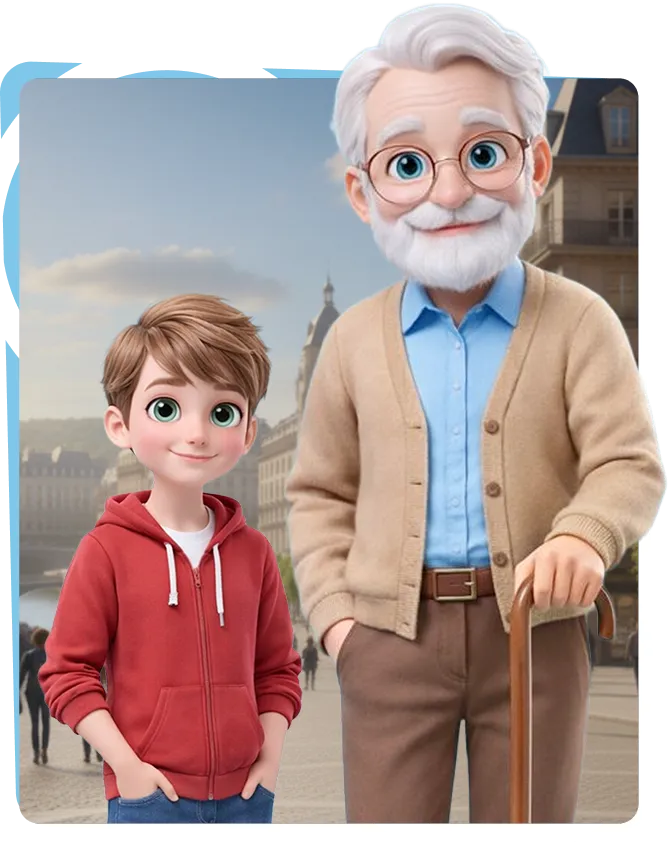
A landmark is more than a shape on a skyline; it’s a story anchor that helps children remember why a place matters. When a game adapts real-world architecture into accessible, cartoon-friendly designs, it preserves recognition cues while staying warm and safe for young players. [UNESCO 2024]
This is where Co-Play Gaming Experiences become powerful: one player can ask, “What does this building remind you of?” while the other explores, searches, and answers.
Cultural content can slip into clichés if it reduces entire regions to costumes, accents, or a single symbol. A stronger approach is to show culture through everyday life—food markets, neighborhoods, public spaces—and to present multiple influences rather than one “icon.”
UNICEF’s and rights-based digital guidance encourages thoughtful, inclusive design that represents diverse childhoods and avoids harm, which applies to cultural portrayal as much as safety. [UNICEF Gaming]
Shared play is where meaning sticks, because children learn by discussing what they see, asking questions, and linking new information to what they already know. Joint media engagement guidance highlights how shared media use can increase learning opportunities by prompting conversation and explanation beyond the screen. [Cooney 2011] A meta-analysis also supports a small positive association between adult-child co-use and learning from digital media. [Taylor 2024]
In practice, Cultural Learning becomes deeper when one player narrates context while the other player drives discovery.
Short, joyful tasks—helping a character, improving a neighborhood, unlocking a cultural district—work like learning loops: observe, choose, act, and see a result. Those loops are more memorable than a lecture because they connect cultural details to action and reward. [Granic 2013]
The best Co-Play Gaming Experiences keep tasks emotionally light, but culturally specific enough to prompt curiosity and conversation.
A premium cultural game experience should create easy off-ramps to offline learning: look up a real photo of the landmark, try a simple recipe, listen to music from that region, or draw the skyline together.
WHO guidance reminds caregivers that screen time should not crowd out movement, sleep, and active play—so using a game as a spark for offline exploration is ideal. [WHO 2019] [CPS 2023]
Hometown’s real-to-cartoon style is designed to adapt real architecture and cultural landmarks into inviting, kid-safe visuals. The city becomes a mosaic of districts inspired by real places, making culture feel discoverable rather than intimidating. That’s the intention behind Co-Play Gaming Experiences in Hometown: one person guides growth and unlocks areas while the other explores and interacts with characters who make the world feel alive. (Brand brief)
If you want Cultural Learning that feels calm and natural, explore Hometown’s culturally inspired districts and landmark-driven neighborhoods. Visit About to understand the design philosophy, then see Features to understand how exploration and planning work together. The best learning signal is simple: if curiosity continues after the session ends, the design is working.